
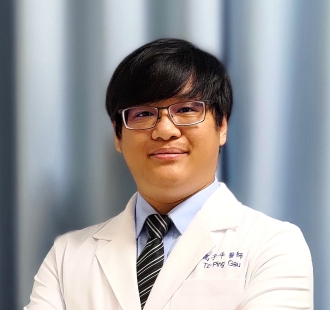


Research Interests
• Machine Learning, Deep Learning
Education Background
• PhD Candidate, Graduate Institute of Clinical Medicine, Kaohsiung Medical University
• MSc, Institute of Information Management, National Sun Yat-sen University
• MD, School of Medicine, Kaohsiung Medical University
Current Position
• Attending Physician, Department of Anesthesiology, Kaohsiung Medical University Hospital
• Researcher, Big Data Research Center, Kaohsiung Medical University
Professional Experience
• Chief Resident, Department of Anesthesiology, Chung-Ho Memorial Hospital, Kaohsiung Medical University
• Attending Physician, Department of Anesthesiology, Chung-Ho Memorial Hospital, Kaohsiung Medical University
• Member, Big Data Research Center, Kaohsiung Medical University
Artificial intelligence agents (AI agents) are rapidly reshaping our imagination of healthcare. Traditional clinical decision support relied heavily on expert systems and rule-based logic, whereas recent advances in Retrieval-Augmented Generation (RAG) and multi-agent architectures have demonstrated far greater flexibility in reasoning. Although no software has yet been deployed in routine clinical practice—with most systems remaining at the stage of laboratory validation or patent development—emerging work from research institutions and open-source communities has already signaled future directions for medicine. For example, Stanford’s Costorm highlights the potential of multi-agent collaboration in medical discussion and research reasoning; the MedRAX agent integrates chest X-ray interpretation with multi-task models to advance image-based reasoning and explanation; and MDAgents is exploring the creation of a healthcare-specific, multiagent, multi-turn collaboration platform. In addition, Microsoft’s AutoGen and healthcare modules within LangChain-Hub enable agents to divide tasks, simulate multiple clinical specialists, patients, or even cross-disciplinary consultants, forming a “multi-agent orchestra” for medical decision support. Beyond reasoning, agents are now extending into operational domains through the Model Context Protocol (MCP), where reducing repetitive errors and ensuring stability become key challenges. Most recently, Gemini Robotics 1.5 has brought AI agents into the physical world, raising possibilities for integration with medical robotics. Taken together, these explorations suggest a pivotal shift: the future of medical decision-making will not rest solely on physicians’ unilateral judgment but will increasingly evolve into interactive processes among humans, patients, and multiple AI agents. This presentation invites us to re-examine the worldview of medicine and to envision what healthcare might look like in the emerging Era of Agents.