
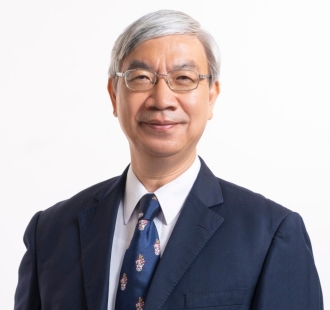


Research Interests
•Scientific Computing, Imaging Science, Bioinformatics
Education Background
•PhD, Department of Statistics and Data Science, Cornell University, USA
•Master's, Department of Statistics and Data Science, Cornell University, USA
•Bachelor's, Department of Electrical Engineering, National Taiwan University
Current Position
•Dean, Biomedical Artificial Intelligence Academy, Kaohsiung Medical University
•Deputy Superintendent, Kaohsiung Medical University Chung-Ho Memorial Hospital
•Distinguished Professor, School of Post-Baccalaureate Medicine, Kaohsiung Medical University
•Distinguished Professor, Institute of Statistics, National Yang Ming Chiao Tung University
•Jointly-Appointed Professor, Institute of Data Science and Engineering, Institute of Artificial Intelligence Innovation, National Yang Ming Chiao Tung University
• Jointly-Appointed Professor, Institute of Artificial Intelligence Innovation, National Yang Ming Chiao Tung University
• Adjunct Professor Department of Statistics and Data Science, Cornell University, Ithaca, New York, USA
Professional Experience
• Dean Office of Academic Affairs, National Yang Ming Chiao Tung University
Artificial intelligence has been widely applied in clinical decision support, medical imaging interpretation, and health data analysis, serving as a major driving force behind the ongoing digital transformation in healthcare. Before the emergence of large language models, AI had already been used to assist disease diagnosis, such as tumor detection and cardiovascular risk prediction, providing reliable tools to support clinical practice. With the rapid advancement of generative AI, clinical innovation has accelerated further. By integrating medical knowledge with large language models, it is now possible to enable intelligent consultations, automated medical documentation, personalized recommendations, and improved communication between healthcare providers and patients.
This presentation will introduce the collaboration with Taichung Veterans General Hospital on the development of Healthcare GPT, which includes electronic medical record generation. The system leverages structured, high-quality templates to assist physicians in producing clinically relevant and well-organized documentation with greater efficiency and accuracy. In addition, the talk will highlight the KMU Genie platform, jointly developed with Kaohsiung Medical University. The platform features five virtual representatives and incorporates generative AI technologies to support clinical assistance, nursing care, and educational innovation. It also serves as a versatile tool for medical training and patient engagement, helping to expand the scope of smart healthcare applications. Finally, the presentation will address key challenges in the clinical implementation of AI and explore its long-term potential in shaping the future landscape of intelligent healthcare systems.